
Why Carnival’s President Is Betting Big on Proximity and Price Power

Skift Take
Value has become the most powerful lever in travel. Few understand that better than Christine Duffy, who leads a brand built on scale, accessibility and price advantage at Carnival Cruise Line.
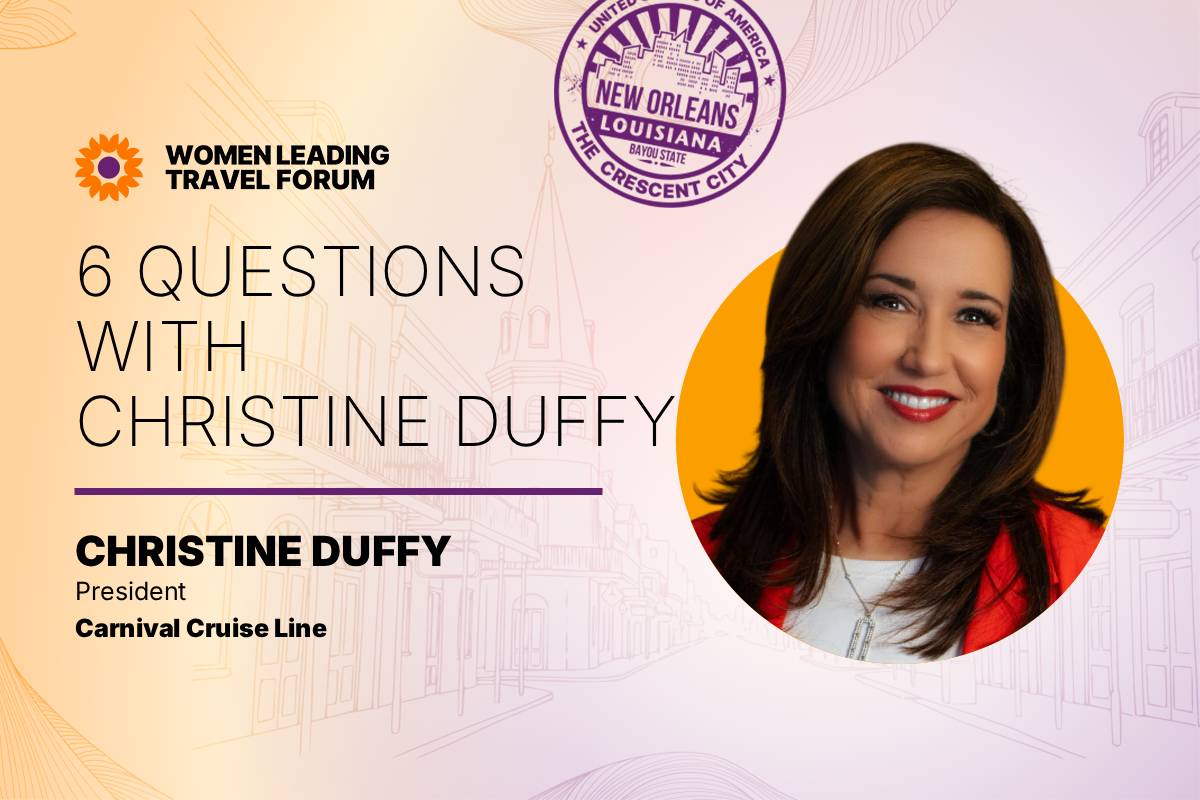
As President of Carnival Cruise Line, Christine Duffy is steering a 29-ship fleet through a moment where value matters more than ever and operational agility has become a competitive advantage.
Nearly 100,000 guests at sea each day give her a real-time view into how consumer behavior is shifting and where demand is holding.
Ahead of her session at the Women Leading Travel Forum 2026, Duffy shares how she’s reading the market, evolving the product and leading through change.
Signals That Matter Now
Q: The travel industry is navigating economic uncertainty and shifting consumer behavior simultaneously. From your vantage point, what signals are you watching most closely right now as you plan for the years ahead?
“There’s no doubt that there is a lot going on in the world right now, and it affects consumer behavior and the cost of doing business. The entire cruise industry is keeping a close eye on what happens in the Middle East, Cuba, and how destination countries are handling cruise tourism (i.e. addition of fees/taxes and sentiment toward the industry).
Eight cruise lines operate under the Carnival Corporation umbrella, and we have the ability to move ships across geographies and across brands to adapt to market conditions. Carnival Cruise Line is currently operating five ships (out of 29 in the fleet) that previously sailed for our sister lines.
Our strategy to operate from more U.S. homeports than any other cruise line has also underscored our strong value proposition, as more than half the U.S. population can drive to a Carnival cruise in less than five hours.
Cruising gives our guests a 25-40% enhanced value over other land-based vacations, and then when you can easily and affordably get to our ships, we provide an even greater value for your vacation dollar.”
Adapting to Changing Guest Expectations
Q: Cruise demand has rebounded strongly, but traveler expectations are evolving quickly. How is your organization adapting the guest experience to meet the expectations of today’s traveler?
“Carnival carries more Americans than any other cruise line – every day we are hosting, feeding, and entertaining nearly 100,000 guests. So, we are in a unique position to tap into evolving guest expectations, and we continually update our offerings to meet and exceed them.
One great example is our recent launch of Express Dining, offering a freshly prepared multi-course dinner experience in under an hour for groups of six guests or fewer. This option is especially convenient for families with young children and for anyone who wants to spend more time enjoying our onboard entertainment and other features. The concept was created in response to trends we were seeing with our guest dining preferences.
Now that we’ve launched it, we’ve received an overwhelmingly positive response and will be offering it on all our ships by the end of May. We’ve also adjusted our regular dining times to earlier hours in response to guest preferences. This trend of consumers wanting to dine earlier has also been growing in land-based restaurants, even in New York City, where the New York Times stated that “For New Yorkers, 6 p.m. is the new 8 p.m.”
Another new program we launched in response to greater interest from consumers in reducing alcohol consumption is our Cheers! Zero Proof, bundling a wide variety of premium, alcohol-free refreshment options, including hand-crafted zero-proof cocktails and energizing coffee creations.”
Building and Retaining Talent at Scale
Q: Talent continues to be one of the biggest challenges across travel and hospitality. What leadership approaches have helped you attract and retain talent across such a large and diverse workforce?
“We have a culture where we want every guest and every team member to feel welcomed and respected. We are so proud to have team members from more than 120 countries, and that diversity is evident both on our ships and in our land-based operations.
We’ve achieved this by reinforcing Carnival’s Core Values throughout the organization and all year-long through our trainings, employee town halls and internal communications.
We also survey our employees every year to get their candid and valuable input, and we listen and implement ideas and programs to continue to make Carnival a great place to work.
Finally, our global talent acquisition team is proactive in going to places across the country and the world to promote our job opportunities and recruit the best possible team members from all backgrounds and origins.
We’re proud of our retention rates across shipboard and shoreside employees and one of the most important things we do as leaders is ‘showing up’ to connect and engage with our team members. I make it a point to visit all our 29 ships in person throughout the year, taking time to sit in on shipboard team meetings, recognizing crew who are going above and beyond, and seeing first-hand how our practices are delivering the best guest experience.”
Balancing Today and Tomorrow
Q: Many leaders today balance short-term performance with long-term transformation. How do you approach making decisions that protect today’s business while also investing in the future?
“Balancing short-term results with investing for future success is something all leaders have to do to keep their organizations thriving. It’s a balance we strive for here at Carnival, by both providing exceptional service to guests today while developing new concepts, ships, and destinations that will keep us competitive in the future.
Even through the pandemic, we continued our long-term investment plans with development of our Excel-class ships and the construction of our new exclusive destination in Grand Bahama, Celebration Key.
That work towards our longer-term goals is paying off now, as those ships, Mardi Gras, Carnival Celebration and Carnival Jubilee are among our most popular.
Last July, we opened Celebration Key, where we’ll soon be approaching two million guests who have visited the destination, and we’re looking forward to our next new ship class coming in 2029!
Leading Through Disruption
Q: As one of the most visible leaders in the cruise industry, what leadership lessons have stayed with you throughout your career when navigating periods of disruption or rapid change?
“I’ve long recognized the importance of building strong teams and being transparent and authentic in our engagement and communications. The industry shutdown during COVID was extremely difficult for the cruise industry as we were unable to operate for 16 months and getting our global team members home was a huge undertaking.
From this experience, I learned the value of resiliency and being able to change course to meet the needs of your organization.
But beyond the pandemic, we were the first cruise line to get our full fleet back into operation and we have since achieved multiple record-breaking years, and our growth continues with the addition of five new ships planned over the next seven years.
At the same time, I recognize the world continues to change rapidly and we must be nimble and open to change to exceed guests’ expectations.”
Continue the Conversation at Women Leading Travel Forum 2026
Q: When you join the Women Leading Travel Forum in New Orleans this June, what leadership challenge or conversation are you most excited to explore with the audience?
“I’m really looking forward to connecting with other women leaders in the travel industry and learning about their successful practices and the unique challenges they are navigating in their respective businesses.
I’m also so happy to be visiting New Orleans, an amazing homeport city where we have welcomed guests on Carnival ships for more than 30 years. And, of course, it’s the home of my friend and our Chief Culinary Officer, Emeril Lagasse!”
Join Christine Duffy at the Women Leading Travel Forum 2026 and be part of the conversation shaping what comes next.
Further Reading: What Olympic-Level Pressure Teaches Today’s Travel Leaders