
Member Spotlight: Yahnny Adolfo San Luis-Wallgren, CEO, Klättermusen Experiences
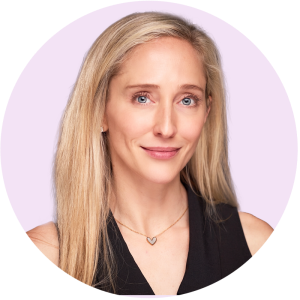
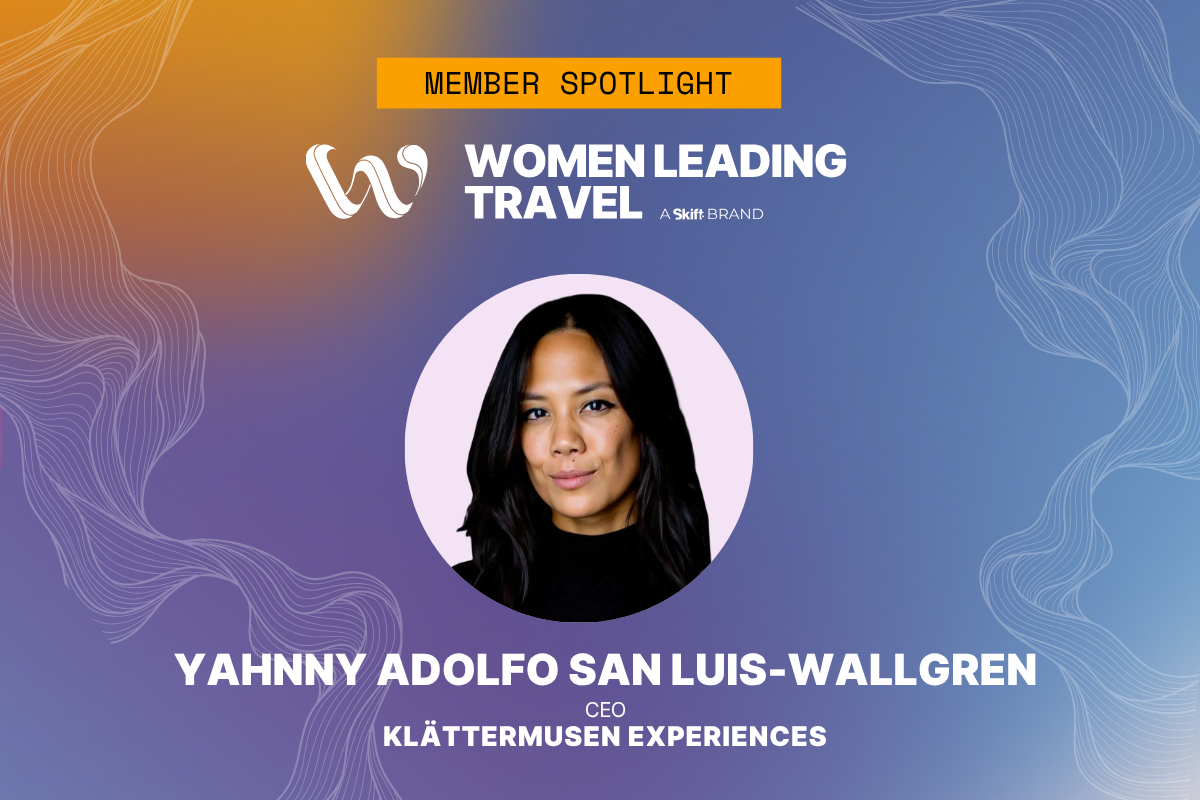
This week, we’re thrilled to feature an inspiring leader who is redefining what it means to lead in active adventure tourism. From overcoming personal challenges to building a purpose-driven company, Yahnny Adolfo San Luis-Wallgren, CEO, Klättermusen Experiences, shares insights on resilience, leadership and the values that guide her journey. Read on to learn more about her path, inspirations and approach to building meaningful experiences in travel.
What’s the best book you’ve read recently?
The best book I’ve read lately is "The Comfort Crisis" by Michael Easter. It explores how the comforts of modern life weaken our health, drive and sense of purpose — and how choosing the right kind of challenges can restore them. The core idea is Misogi: once a year, set a goal with roughly 50–50 odds, manage the risk and don’t post about it. The challenge is for you, not for applause or bragging rights. Around that are simple, tangible practices: long phone‑free time outside, quiet and boredom, carrying weight over distance, eating simply and sometimes fasting.
This book resonates with me because it explains choices I’ve already made. After six years recovering from a car accident and relearning to walk, I trained to become a professional triathlete. I got up at 4:30 a.m., started swim training at 6:00 a.m., was at my desk by 8:00 a.m., then back to the pool in the evening or out on the bike or a run, rain or shine, all year-round. I kept it off social media until I reached my goal. In parallel, I traveled as a professional photographer while running a travel company, meeting future partners and funding travel through paid shoots. Both carried 50–50 odds, and I did them to gain industry knowledge and relationships. All of that now feeds the long game: building Klättermusen Experiences into the number one active-adventure company in our sector.
What do you love most about the industry?
I love that this industry shapes how we see ourselves and each other, but I’ve also seen what happens when that power is misused. When I was the Managing Director of a locally owned luxury adventure travel company in Hawaiʻi, I worked with high-net-worth clients while watching locals priced out of their own homes, unable to live in neighborhoods transformed by tourism. I couldn’t allow our company to operate like so many others, advertising Hawaiʻi as a playground for visitors while ignoring the people who call it home. So I made a deliberate choice: hire local guides, partner with small businesses and stay in locally owned accommodations. We wanted every dollar that came in to stay in the islands and contribute to the community that made those experiences possible.
That experience changed me and reminded me why I love this industry in the first place — because when it’s done right, tourism has the power to heal what it once harmed. It can restore pride, protect culture and give communities the means to define their own future. I carry that belief into every decision I make now as CEO of Klättermusen Experiences: build systems that give back, empower local partners and design experiences that leave a place stronger than before we arrive.
What is something the community may be surprised to learn about you?
While in primary school in the U.S., I experienced racial violence. Kids threw rocks at my head outside our home, and one nearly drowned my sister at a public pool until a friend pulled her out. In high school, a friend who was the only other Asian kid at a party was wrongly accused and chased by teenagers with bats. Our friends defended him, and eventually others stepped in because they knew the truth. Years later, in a business meeting with a male colleague, he told me in front of everyone that I looked the part of a “young, hardworking businesswoman” because I was “Asian and that everyone liked doing business with an obedient and unthreatening woman.”
That mix of threat and contempt lodges in the body as trauma and anxiety. You learn early that someone might decide to chase you down and hurt you for who you are. But I never stepped down to that fear. When I started my first company in my early 20s in the male‑dominated industry of risk management and commercial insurance, racism and sexism were daily occurrences. Then I began traveling alone for work, and men shouted racial slurs at me in public. I faced hundreds of threats to my life and dignity as a woman of color and kept going because I refuse to live by other people’s hatred.
More than 50 countries later, I have friends, colleagues and opportunities I would never have found if I had allowed fear to suffocate my determination and to shatter all the stereotypes for Asian women that paint them as submissive and fearful of traveling alone.
What’s the toughest part of being in charge?
Leadership can feel isolating. I spent years pushing forward, reaching each new goal, then looked up and realized I was on an island. As a woman of color in active adventure tourism, that feeling is sharper because the room is still mostly white and male. That’s why I value communities like Women Leading Travel. We support each other and speak openly with peers who know the realities of leading as a woman executive.
Active adventure tourism often assumes that leadership requires a specific type of person. It doesn’t. I don’t fit that mold, and I don’t need to, because this is my space, too. Groups like Women Leading Travel help shift the narrative: women run companies at the top, and we do so on our own terms.
What are your nonnegotiables when it comes to work-life balance?
I don’t believe in work–life balance. When it’s time to step back, I do it and move on. In practice, I protect phone‑free time outside every day and ring‑fence time with my husband: one long, active block each weekend where we’re out cycling, paddling, working on our house, or now that it’s colder, skiing or ice skating. I keep a daily “thinking walk” in the forest next to our home. The team and I follow clear availability rules: no one is always on, we escalate only for guest or guide safety, and if something can wait until morning, it waits.
What woman inspires you right now and why?
Maria Ressa inspires me with her courage in the face of persecution. As a journalist and Nobel Peace Prize laureate, she stood up to political intimidation in the Philippines and risked her freedom to defend truth and democracy. Her work reminds me that leadership is about doing what’s right, even when it’s dangerous or unpopular. I relate to her resilience and her ability to speak truth to power, because leading in tourism today also means challenging systems that exploit people and places for profit. Like Ressa, I believe integrity is a daily choice.
Lhakpa Sherpa’s story moves me because it redefines what endurance and leadership look like. Born in a remote village in Nepal, she became the first Nepali woman to summit Mount Everest and return alive — a milestone achieved in a world that rarely recognized women like her. She went on to climb Everest ten times, more than any woman in history, all while raising children on her own. After enduring domestic violence and leaving her marriage, she moved to the United States with almost nothing, working as a dishwasher and grocery store clerk to support her daughters while continuing to climb. I know what it means to rebuild, to take risk after risk, because standing still isn’t an option. Like Lhakpa, I’ve had to fight for my place in an industry that wasn’t built for women like me — and turn that fight into purpose.
What is one industry trend you’re closely tracking and why?
I’m keeping a close eye on the increased use of “sustainability” as a soundbite to appear responsible and socially aware. Tourism is starting to resemble a template, and every company sounds the same, operating in a bubble of peers that pat each other on the back.
At the end of the day, travelers aren’t breaking down doors to book trips described as sustainable, responsible or eco-friendly. They book trips that help them escape their everyday life and create lasting memories. Sustainability will always lose to fantasy if we approach it with platitudes.
For me, the opportunity lies in proof — how much revenue stays in local hands, how many partners return year after year and how many local suppliers invite us back into their communities. The companies that will stand out in the next decade aren’t the ones shouting the loudest about sustainability, but the ones building systems that make it inevitable.
What is one thing you look for when interviewing a job candidate?
I look forward to the moment when a candidate provides a research-based solution to a problem they learned about the company, explains why it works and how to implement it. I hire leaders I don’t have to micromanage.
What’s something that you learned about yourself in the past year?
For years, I was used to staying in the shadows while consulting for other businesses and helping them succeed. But I want others to see that it’s possible to be someone like me, a Filipina Polynesian American, and lead a company in Sweden that caters to a primarily white, affluent audience.
I haven’t lived the life of the average CEO in active adventure tourism, and that’s all right. I bring a multicultural background and nuance to my work, one that I’ve rarely seen in this sector and is indeed uncommon in travel leadership in the Global North. Growing up as the daughter of a U.S. immigrant, I had a challenging childhood, far from the life I have today — but I never gave up.
What is the best piece of advice you’ve ever received?
“F*ck it.” Those words taught me to take action and figure things out along the way, without overthinking how I get to the end. My mentor said those words when I mentioned that I was going to do a triathlon and become a professional triathlete as soon as I could walk again, after a multicar accident. And I did precisely that — signed up for my first triathlon and completed it with little to no training. He was screaming at the top of his lungs at the race when I made it to the end.
What values are most important to you as a leader?
As a leader, my core values are honesty, kindness, and courage. Those three guide my actions and decisions. I believe in leading with integrity and treating others with respect, fostering a culture of trust and reliability.
What's the most important thing people should know about you?
You will always know exactly what I want, what I feel, and what you will get from me.
What’s a tip you have for productively leading a hybrid team?
Build one asynchronous operating system that gives everyone the same context and clear ownership, regardless of time zone. We are remote and async by default: seven core team members in different countries, marketing and finance split across two cities in Sweden, and contracted guides and partners worldwide. We run that system through our project-management platform. Every initiative is a project with an owner, scope, dependencies, due dates and SOP checklists that sit alongside the work. We hold short weekly check-ins to clear blockers and confirm decisions. I manage for outcomes, not online presence and we meet in person only when it adds clear value, such as field audits, guide training or strategic planning, which gives senior people room to do their best work.
Where is your favorite place you’ve traveled to? Why?
My favorite place is Courmayeur, where my husband asked me to marry him. We were sitting on a cobblestone street, enjoying focaccia pizza from a tiny restaurant. Even after seeing so many of the world’s most beautiful places, our simple moment became the most beautiful moment I could remember. This personal connection to travel, with the special memories taken from even the simplest moments, is what fuels my passion for the industry.
What is the top item on your bucket list?
I want to climb my first 4,000m+ peak with my husband. We haven’t picked a specific place yet, but we’ve been talking about it for some time. My husband is an experienced alpinist, so I would feel safe going with him. If we decide to do something more intense after the first climb, we would, of course, hire a professional mountain guide.
What do you do to recharge?
I love being active, so I enjoy spending time in nature, whether it's taking a walk in the forest, going on long gravel bike rides in the countryside or paddling in the Swedish archipelago with my husband.
What is your biggest accomplishment?
Not giving up during my six years of recovery following my car accident. The fight was more mental than physical. I promised myself that if I were ever to walk again, I would never accept anyone telling me that something is impossible. As long as I set my mind to something, I don’t let anything get in my way of achieving it.
What advice would you give to the next generation of female leaders?
My niece is the closest I’ll ever come to being a mother. In September, she landed her dream role at a research lab. We spent two weeks sharpening her resume and personal statement before she applied. The advice I gave her is the advice I’d give any young woman: lead with courage, claim the rooms that weren’t built for you, arm yourself with knowledge and preparation, and keep your standards high. The road is longer for women, and as a woman of color, you should prepare to work even harder. Use courage as your currency to pay for everything you want in life. Demand what you’re worth, protect your energy and build a circle of women and allies who back you. When fear shows up, move anyway. That is how you build a career and a life on your own terms.
What gets you up in the morning?
I know that I’m getting closer every day to achieving my goals.
What do you like most about being a member of Women Leading Travel?
It’s good to know that I’m not on an island. I have peers from whom I can learn, and vice versa.
Connect with Yahnny on LinkedIn to learn more.