
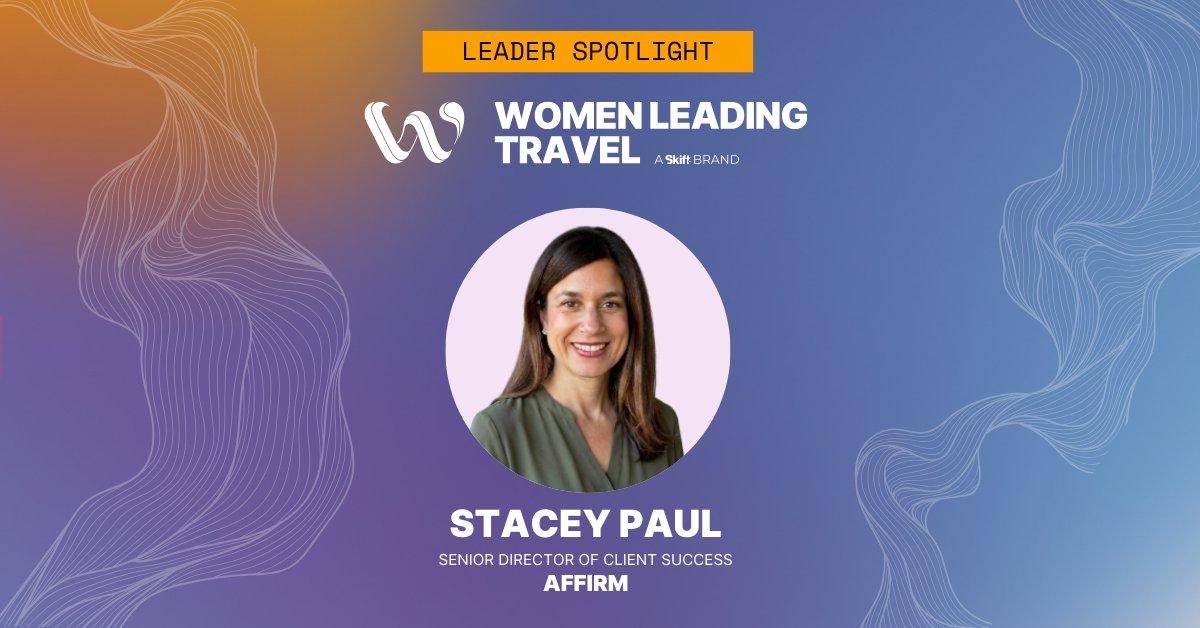
Spotlight: Stacey Paul, Senior Director of Client Success, Affirm

Skift Take
AI and changing consumer behavior are transforming travel, but meaningful leadership will still come down to listening well, building strong teams and staying adaptable.
As we prepare to welcome the industry to New Orleans next month for the Women Leading Travel Forum, we’re continuing to spotlight the voices shaping the future of travel and hospitality.
This week, we feature Stacey Paul, Senior Director of Client Success at Affirm. In this conversation, Stacey reflects on the realities of leadership, the pace of innovation transforming travel, and why meaningful mentorship and honest conversations matter more than ever for women moving into senior roles.
Her perspective speaks to many of the themes that will define this year’s gathering, such as navigating rapid technological change and building teams with empathy, adaptability, and authenticity. She also offers a candid look at the personal side of leadership and the sense of fulfillment that comes from doing work you genuinely love.
Read the full conversation below for Stacey’s insights on leadership, AI, the future of travel, and the women inspiring her along the way.
What are you most looking forward to at the Women Leading Travel Forum in New Orleans?
I'm looking forward to spending three days immersed in conversation with women whose careers I deeply admire. Women Leading Travel events always shift my perspective, and I walk away thinking differently about leadership and how I show up both professionally and personally. I appreciate the caliber of the dialogue and that the participants go beyond surface-level conversation. They share real challenges and engage in honest conversations. It's networking at its most meaningful.
What travel trend are you watching most closely and why?
I'm curious about the rapidly intensifying pace of innovation and how it will shape consumer preference. We have more choices than ever, with a dizzying array of accommodations and less conventional destinations taking the spotlight. We also have more inspiration than ever, with influencers and everyday travelers reaching out to us through social media, and companies diversifying to capture as much travel spend as possible through one-stop-shop strategies. Layer AI on top of all of that, and the question becomes: how do these trends coalesce to shape traveler behavior?
Looking back on your career, what’s a decision or risk you took early on that ended up shaping the leader you are today?
Early in my career, I deliberately chose to pursue a range of roles across different industries. That experience taught me that understanding what you don't enjoy and where you don't excel is just as valuable as discovering your strengths. When you land in a place where you're both succeeding and fulfilled, that fulfillment fuels your leadership — you bring positive energy and conviction to your role. It also builds confidence, because you're always more assured when speaking about something you know deeply and can discuss with authenticity.
What’s one misconception people still have about leadership, especially for women in senior positions?
In The Devil Wears Prada 2, there's a scene where Miranda unapologetically admits to relishing her job. She says, "People should know there's a cost. But boy, I love working. I really do." That line has resonated widely, and I think it's because it gives women permission to say something we don't hear enough — that it's okay to love what you do, to make sacrifices, and to say no to some things so you can say yes to others. It normalizes being successful and owning the choices that come with it. There’s a misconception that senior women are defined by the juggling act. And while that act is real, what often gets overlooked is the genuine devotion to our craft and the sense of achievement we get from what we've built professionally.
What’s the most challenging part of leading a company or team that people rarely talk about?
People talk a lot about the strategic side of leadership, but what comes up less often is how personal it is. Leading a team means managing a host of different personality types, experience levels, and working styles. How people think, communicate and collaborate runs the gamut, and the range of differences often becomes more pronounced as a team grows. Some members are more assertive, while others are more reflective, and some are natural self-starters, while others need coaching and structure. That diversity is what makes a team dynamic and well-rounded, and it can be humbling to flex to those differences while staying true to your own style.
What advice would you give to younger women entering the travel industry who want to move into leadership roles?
This advice applies to women seeking leadership roles in any industry: surround yourself with people who know more than you do, and be open to learning from them. Find a mentor inside your company, someone who believes in you and can champion and guide your career. That person knows the specifics of what you do and can relate your strengths and areas for development to what's actually happening at the company. Outside coaches are just as valuable, because they give you a perspective you can't get from the inside and a fresh read on what you need to work on to get to the next level.
Which women in travel or business are inspiring you right now, and why?
I'm surrounded by inspiring women at Affirm on my own team, within our leadership, and across every level and function of the organization. Affirm is a challenging place to work, in the best way possible, because we have a high-performance culture that pushes people intellectually while also being a place where people genuinely enjoy what they do. The women I work with embody that balance — they have grit, they're exceptionally sharp, and they lead with collaboration and generosity. That combination is rare, and it's a big part of what makes Affirm special.
What qualities do you think the next generation of women travel leaders will need?
The travel landscape has changed dramatically in the years I've worked in it. We have more choices than ever, greater accessibility, and so many more avenues for travelers to discover where to go and what to do when they get there. That's exciting, but it also means there's more noise and pressure than ever to stand out. The next generation of women leaders will need to be relentless listeners, staying close to how travelers think and behave, keeping up with the pace of innovation, and being nimble enough to adapt when things shift.
When you think about the future of travel over the next five to ten years, what excites you most and what concerns you most?
I'd be remiss if I didn't mention AI. It's one of the most exciting and most uncertain forces in travel right now. It’s making companies more innovative, efficient, and better able to understand what travelers want before they even ask. We're moving toward a world where your entire trip can be personalized and managed in one place, from discovery to booking. What gives me pause is the pace of it all — the technology is moving at lightning speed, and perhaps faster than we’reready for.
To find out more about Affirm, visit affirm.com
This content was created collaboratively by Affirm and Skift Studio.